- Utkarsh Urvashi CHS, 1st Floor, Veshvi, Alibag
- info@sahyadriworldtrade.com
- Open: Mon–Sat: 08:00 – 18:00

Frozen vs. Dehydrated Vegetables: Which Is Better for Food Processing & Global Trade?
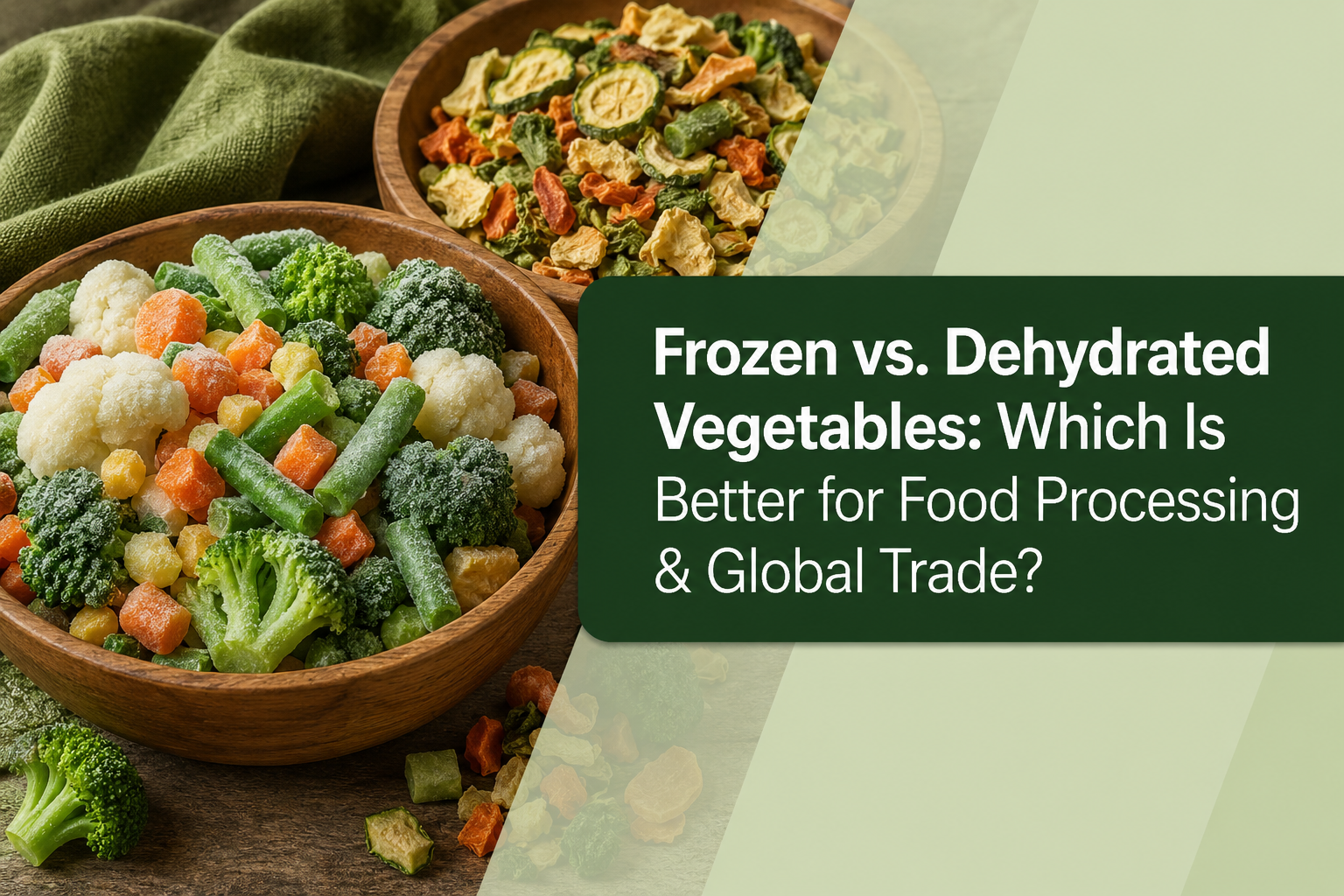
Frozen vs. Dehydrated Vegetables: Which Is Better for Food Processing & Global Trade?
In the highly competitive world of commercial food production and international procurement, ingredient sourcing is a delicate balancing act. Procurement managers, HoReCa (Hotel, Restaurant, and Café) buyers, and global importers are constantly weighing three critical factors: quality, cost, and supply chain reliability. When it comes to sourcing vegetable ingredients for soups, ready-to-eat meals, snack foods, and seasoning blends, buyers face a persistent dilemma: should they import frozen or dehydrated vegetables?
While frozen vegetables have historically been a staple in commercial kitchens, the landscape of global trade is shifting. Rising freight costs, volatile cold-chain logistics, and the demand for longer shelf lives are driving a massive transition toward dehydration.
For B2B buyers looking to optimize their margins without sacrificing flavor or nutritional value, understanding the commercial differences between these two processing methods is vital. In this guide, we break down why dehydrated vegetables are increasingly dominating global trade and how partnering with the right dehydrated vegetable supplier can transform your manufacturing bottom line.
The Cold Chain Conundrum vs. Ambient Export Logistics
The most glaring difference between frozen and dehydrated vegetables lies in how they traverse the globe.
Importing frozen vegetables requires a continuous, unbroken cold chain from the processing facility in the country of origin to your warehouse. This means specialized refrigerated trucks (reefers), temperature-controlled shipping containers, and costly cold storage warehousing upon arrival. A single power failure, customs delay, or mechanical breakdown can result in immediate product spoilage, leading to massive financial losses.
Conversely, dehydrated vegetables eliminate the need for the cold chain entirely. Through advanced hot air or freeze-drying processes, moisture is gently extracted from the vegetables, rendering them microbiologically stable at ambient temperatures.
The Logistics Advantage:
-
Zero Cold Storage Required: Dehydrated products can be stored in standard, dry warehousing facilities, drastically reducing overhead costs for importers and distributors.
-
Immunity to Temperature Fluctuations: Transit delays at congested global ports do not risk the integrity of your cargo.
-
Simplified Customs Clearance: Dry ingredients often face fewer immediate quarantine hurdles compared to highly perishable frozen goods, streamlining the import process.
The Bottom Line: Cost Comparison and Freight Efficiency
When analyzing the total landed cost of imported ingredients, buyers must look beyond the initial price per kilogram. Water is heavy, and it offers zero commercial value when you are paying to ship it across the ocean.
Fresh and frozen vegetables are composed of 80% to 90% water. When you import a shipping container of frozen carrots or onions, you are predominantly paying premium refrigerated freight rates to transport frozen water.
Bulk dehydrated vegetables solve this economic inefficiency. By removing the moisture, the weight and volume of the product are reduced by up to 90%.
-
Freight Savings: A single 20-foot container of dehydrated onions yields the same flavor and ingredient volume as multiple containers of raw or frozen onions. You pay a fraction of the shipping costs per serving.
-
Energy Savings: With global energy prices fluctuating, the cost of running industrial freezers 24/7 is a significant burden for food processors. Dehydrated ingredients require zero energy to store.
For high-volume food processors, replacing just a percentage of frozen ingredients with dehydrated alternatives can result in hundreds of thousands of dollars in annual supply chain savings.
Shelf Life and Waste Reduction
Food waste is a silent margin-killer in the HoReCa and commercial processing sectors. Frozen vegetables typically have a shelf life of 12 to 18 months. However, they are highly susceptible to freezer burn over time, which degrades their cellular structure, color, and flavor. Once thawed, they must be used immediately, often leading to end-of-day waste in commercial kitchens.
Dehydrated vegetables offer unparalleled stability. When packaged correctly in moisture-barrier, vacuum-sealed, or multi-wall bulk sacks, dehydrated flakes, minced bits, and powders can easily maintain their sensory and nutritional profiles for 24 to 36 months.
Because they possess a remarkably low water activity level (usually below 0.6 Aw), the growth of bacteria, yeast, and mold is entirely inhibited. Production lines can draw exactly what is needed for a daily batch without worrying about thawing times or leftover spoilage.
Superior Applications in Food Processing
While frozen vegetables are suitable for standalone side dishes, they are often a liability in complex food manufacturing. Adding frozen ingredients introduces excess, uncontrolled water into a recipe, which can dilute flavors and ruin the texture of the final product.
Dehydrated ingredients are engineered specifically for precision manufacturing. They are the preferred choice for:
-
Instant Soups and Noodles: Dehydrated flakes rehydrate perfectly upon contact with hot water, returning to their original shape and releasing concentrated flavor.
-
Spice Blends and Rubs: As a leading vegetable powder manufacturer, Sahyadri World Trade provides micro-milled powders that blend seamlessly into dry rubs, marinades, and snack dustings without clumping.
-
Sauces and Condiments: Dehydrated garlic and onion granules absorb the surrounding liquids in a sauce, thickening the texture naturally while providing a robust, consistent flavor profile that frozen purees cannot match.
Spotlight: India as a Premier Dehydrated Onion Exporter
When discussing global vegetable dehydration, onions and garlic are the undisputed kings of the market. Global food brands rely heavily on the pungent, high-solid varieties of onions grown specifically for dehydration.
India has firmly established itself as the world’s leading dehydrated onion exporter. The agro-climatic conditions in states like Gujarat and Maharashtra produce onions with exceptionally high total soluble solids (TSS). This means they yield a sharper, more intense flavor profile and a pristine white color after dehydration compared to varieties grown in other regions.
Whether you require kibbled onions for commercial stews, minced onions for burger patties, or fine onion powder for extruded snacks, sourcing directly from a tier-one Indian exporter guarantees superior pungency and strict adherence to international food safety standards (such as ASTA, FDA, and EFSA guidelines).
Bulk Availability and Private Labeling Capabilities
Large-scale importers require suppliers who can handle intense volume requirements while offering flexibility in presentation. Sahyadri World Trade is structured to meet these exact B2B demands.
We maintain robust bulk dehydrated vegetables inventories, ensuring that our partners never face a stock-out during their peak production seasons. Furthermore, we understand that modern global trade requires branding agility.
Private Labeling Solutions: For retail distributors and cash-and-carry wholesalers targeting the HoReCa sector, we offer comprehensive private labeling services. We can process, blend, and pack dehydrated vegetables directly into your brand's custom, retail-ready, moisture-proof packaging before it even leaves our facility. This bypasses the need for secondary repacking at your destination, saving you crucial time and labor costs.
The Verdict: Future-Proofing Your Supply Chain
While frozen vegetables will always have a niche in certain culinary applications, the math overwhelmingly favors dehydrated ingredients for B2B food processing, bulk manufacturing, and global trade. The eradication of cold chain reliance, the massive reduction in freight costs, and the extended, waste-free shelf life make dehydrated vegetables the smartest procurement choice in today’s volatile market.
Choosing the right dehydrated vegetable supplier is the final piece of the puzzle. At Sahyadri World Trade, we combine advanced dehydration technology with deep-rooted agricultural expertise to deliver ingredients that meet the highest global standards.
Looking to optimize your ingredient procurement? Connect with our export division today to compare costs, request product specifications, and discover how our dehydrated vegetable solutions can streamline your global operations.